
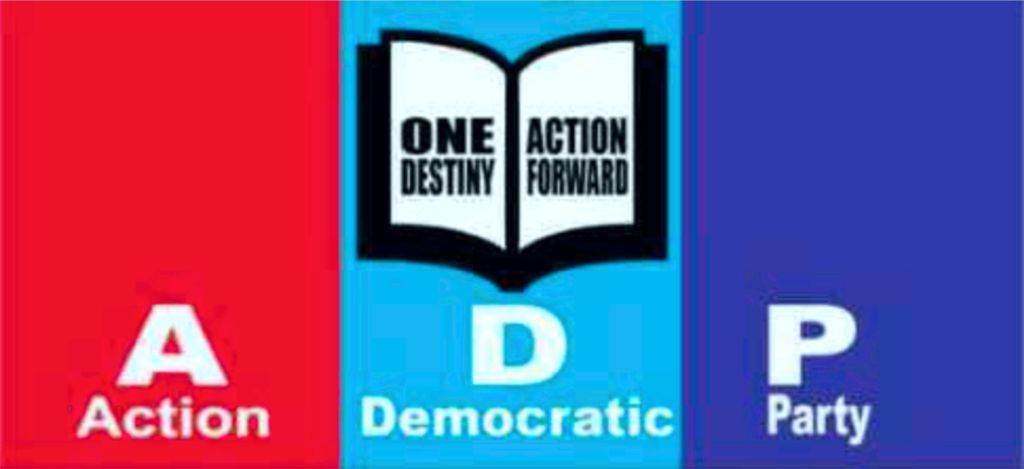

When Nigerians file out to vote in 2027, one of the names on the ballot may carry more weight than many expect: the African Democratic Congress, better known as ADC.
On paper, ADC is a registered political party with a constitution, organs, and a modest record of electoral success. In practice, however, it has often been less about grassroots mobilization and more about the power plays of Nigeria’s political elite.
Today, it finds itself once again in the spotlight, caught between its fragile structures and a new coalition of heavyweights eager to use it as a launchpad against the ruling All Progressives Congress (APC).
A Party with Small Footprints:
The ADC was formally registered nearly two decades ago, first as the “Alliance for Democratic Change” before adopting its current name. Unlike the big players: – APC and PDP – the party has never commanded a broad national following. Its strongest base lies in Kogi State. In 2023, the party pulled off a rare feat by winning two House of Representatives seats. One lawmaker, Idris Salman, later defected to the APC, leaving Hon. Leke Abejide as the party’s lone flag-bearer in the federal legislature. Abejide’s hold in Yagba constituency is proof that the ADC can deliver in pockets of Nigeria. But beyond such enclaves, the party’s name recognition remains limited.
Obasanjo and the 2018 Experiment:
The ADC’s small size has never stopped it from punching above its weight – thanks to Nigeria’s revolving-door elite politics. In 2018, former President Olusegun Obasanjo unveiled his Coalition for Nigeria Movement (CNM) and swiftly “adopted” ADC as its political home. Within months, the party became part of the Coalition of United Political Parties (CUPP), a grand alliance of opposition groups that backed Atiku Abubakar for president. But the move was driven from the top down. Party cadres had little say, and ordinary members were left watching as big names hijacked the ADC brand for their electoral calculations. When the 2019 elections came and went, ADC quickly receded into the shadows.
2025: Déjà Vu in Abuja:
Fast forward to July 2025. Opposition leaders, bruised by the APC’s dominance and desperate for a united front, gathered in Abuja and unveiled what they called the “Rebranded ADC.” It was a who’s who of Nigerian politics: Atiku Abubakar, Peter Obi, Bukola Saraki, Nasir El-Rufai, Rotimi Amaechi, and other big names shared the stage. Former Senate President David Mark was named interim chairman. Ex-Osun governor Rauf Aregbesola became interim secretary. The message was clear: the opposition was rallying under the ADC to stop APC in 2027.
Yet, almost immediately, trouble began. The Independent National Electoral Commission (INEC) refused to recognise the caretaker leadership, insisting that the old structures led by Ralphs Okey Nwosu remained in control. Within weeks, lawsuits, press statements, and factional battles broke out. The ADC was back in crisis mode.
The Elite Versus the Grassroots:
The crisis reveals a deeper fault line: who really owns the ADC? On one hand are long-serving party members who have struggled for years to keep the ADC afloat. On the other are heavyweight politicians with national clout but little connection to the party’s grassroots. To critics, the “Rebranded ADC” is simply a convenient banner for political elites who cannot agree on joining PDP or floating a new party from scratch. To supporters, it represents Nigeria’s best hope of finally breaking APC’s stranglehold on power. The party itself remains torn in the middle. Without INEC’s recognition, the coalition’s caretaker executives cannot field candidates. Without elite buy-in, the grassroots structures remain too weak to make a national impact.
Lessons from the Past:
This is not the first time Nigeria has seen such a dance. The CUPP alliance of 2018 collapsed under the weight of conflicting ambitions. The Social Democratic Party (SDP) once enjoyed a similar “coalition of elites” moment but fizzled at the ballot. ADC risks the same fate unless it can bridge the gap between the party’s existing structures and the ambitions of its new suitors.
Looking to 2027:
As things stand, four big questions hang over the ADC experiment:
1, Will INEC eventually recognise the rebranded leadership?
2, Can the coalition of big names hold together once presidential tickets are at stake?
3, Will grassroots members and state chapters rally behind the elite project or revolt against it?
4, Can ADC hold and expand its foothold in places like Kogi, proving it has more than just borrowed credibility?
The answers to these questions will determine whether ADC becomes a true coalition party, a temporary vehicle for elite bargains, or simply another footnote in Nigeria’s crowded political history.
Conclusion: Between Hope and History:
For a party with only a handful of lawmakers, ADC has attracted an outsized share of attention in Nigerian politics. Each time, it has been less about what the party has built from the grassroots up and more about what elites believe they can build on its platform. Whether the ADC can finally move from being a political playground for godfathers to a genuine coalition of people remains one of the biggest tests ahead of 2027.
Until then, the party sits at a crossroads – its name in the headlines, its future on shaky ground, and its fate once again tied to the ambitions of Nigeria’s restless political elite.
👉Join this WhatsApp group for more updates





Leave a Reply