

Today, ADP Lagos as the major voice of the opposition, under the banner of accountability, sovereignty, and justice, we must confront a matter of grave importance – one that touches upon our nation’s dignity, our constitutional autonomy, and our standing in the global order.
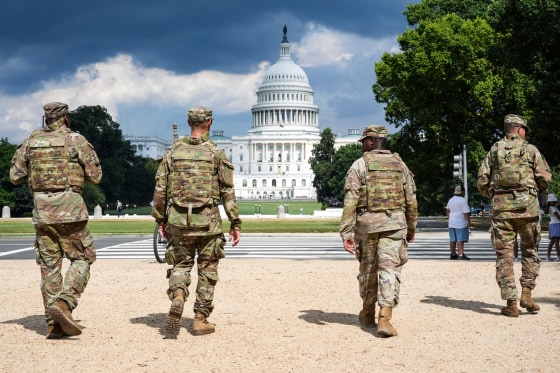
I speak of the recent pronouncement by Donald J. Trump, President of the United States of America, that he has ordered the United States Department of War to prepare for possible military action in the Federal Republic of Nigeria, in response to allegations that the Nigerian government has failed to protect Christians from extremist violence.
We must ask ourselves, not with knee-jerk reaction, but with sober reflection: Should the United States engage Nigeria in military action?
And what should be our posture, as Nigerians, as Africans, and as global citizens committed to peace and justice?
1, On the question of sovereignty and international law.
Let us begin with the foundational precept: every sovereign state holds within its borders the inalienable right to make decisions about its own security, governance, and internal affairs. Nigeria is no exception. The notion that another power can unilaterally invade or initiate military operations on our soil, predicated upon their own interpretation of events, is deeply troubling. By threatening “fast, vicious and sweet” operations – as President Trump did in his social-media post – the U.S. risks undermining the norm of non-intervention in the internal affairs of sovereign nations.
For we the opposition party, this is unacceptable. We believe international cooperation is essential – especially to fight terrorism, protect innocent lives, and promote religious freedom – but cooperation must be anchored in respect for our sovereignty, carried out in partnership, not through unilateral military incursion.
2, On the complexity of violence in Nigeria.
The U.S. claim centres on the treatment of Christians in Nigeria. But the reality is far more nuanced: our country faces a multiplicity of violent threats – from Islamist-extremist insurgents in the northeast, to communal conflict between farmers and herders, to ethnic and resource tensions. Analysts point out that many of the victims of armed groups remain Muslim, and that isolating violence by religious identity alone risks oversimplification. We the opposition party asserts that the Nigerian government must be supported – not bypassed or condemned unfairly – in its efforts to secure all citizens. If we allow external actors to set and execute military policy within Nigeria without full distinction and partnership, we risk igniting further instability, civilian casualties, and long-term damage to our national fabric.
3, On the practicality and consequences of military action.
Let us be frank: a direct U.S. military intervention in Nigeria is not only politically fraught, but logistically and strategically questionable. Nigeria is a vast country of more than 220 million people, dispersed terrain, multiple jurisdictions, porous borders with Niger, Chad and Cameroon, and intertwined conflicts. An intervention could lead to unintended consequences: escalation of violence, civilian harm, backlash from local communities, and a weakening of Nigeria’s own institutions. It could also fuel anti-foreign sentiment, undermine democratic governance, and diminish Nigeria’s agency in determining its future.
4, On the role of the Nigerian government and the opposition’s responsibilities.
We the opposition party recognise that our own government bears primary responsibility for protecting citizens and preserving religious freedom. We therefore propose the following course of action:
Engage the U.S., regional African organisations and multilateral institutions in a framework of mutual cooperation, not coercion. Aid, intelligence-sharing and capacity-building must proceed with respect for Nigerian sovereignty.
Accelerate reforms within Nigeria: strengthen the rule of law, ensure timely and impartial investigations of attacks regardless of faith or ethnicity, empower local security forces, protect religious minorities, and tackle root causes of violence such as poverty, marginalization, climate change, land disputes and corruption.
Launch a diplomatic initiative: Nigeria should work through the United Nations, the African Union, ECOWAS and other stakeholders to strengthen mechanisms for protecting religious freedom and civilian populations – thereby reducing the pretext for external intervention.
For we the opposition party, we commit to rigorous oversight of our own government, and to public engagement: prompt reporting, transparent budgets for security, and civic education centred on tolerance, human rights, and national unity.
5, Our stance: Military action is not the right path.
Therefore, the Action Democratic Party, ADP Lagos, the major opposition party, stand firmly against the notion of the U.S. engaging in military action against Nigeria in the absentia of genuine consensus, mutual agreement, clear legal mandate, and full respect for sovereignty. We oppose any military incursion that is unilaterally imposed, lacks transparency, or bypasses Nigerian institutions.
We proclaim instead: yes to partnership and shared responsibility – no to external boots on our soil without our full participation and consent.
6, The way forward – a constructive, principled alternative.
We call on the U.S. to pause any immediate plans for military action, and instead open direct diplomatic channels with Nigeria, offering assistance, training, intelligence-support and humanitarian aid under joint governance structures.
We urge Nigeria’s government to invite international observers and human rights organisations to document and address religious persecution claims, to build credibility and trust.
We recommend that Nigeria and the U.S. jointly initiate a Regional Security and Religious-Freedom Dialogue involving West African states – thereby creating regional ownership and reducing external unilateral threats.
Finally, we ask the Nigerian people to remain vigilant: unity across faiths is our strength; religious intolerance is the enemy. Our nation must not be portrayed as ‘Christian vs. Muslim’ in the international arena; we are Nigerians first, believers of many faiths, committed to one destiny.
Conclusion:
Fellow citizens, ADP Lagos, the major opposition party holds that the path to peace, stability and justice in Nigeria is not through foreign military intervention, but through empowered, domestically-led, transparent reform coupled with genuine international cooperation. We defend our sovereignty, uphold human rights for all Nigerians, and reject any simplification of our complex national reality into a narrative that justifies external use of force.
Let us meet the challenge before us with courage, unity and wisdom. Let us convince the world that Nigeria can solve its problems, protect its people, and forge its own destiny – not as a subject of unilateral foreign intervention, but as a capable and proud sovereign nation.
Thank you, and may the spirit of our people guide us in peace, justice and unity.
Long live the Federal Republic of Nigeria!
ADP Lagos State Chairman Barr. Adewale Bolaji



Leave a Reply